One or two of you already know me and that I represent the Access Association on the British Standards Institute committee B559 which is the same committee responsible for BS8300. In that capacity, I am involved in conversations about feedback being received since publication and it is in relation to some responses received that I am seeking your feedback with this article.
Many of the Access Association members will no doubt have spotted and attempted to implement the very specific step nosing requirements in BS8300:2018. As a quick recap:
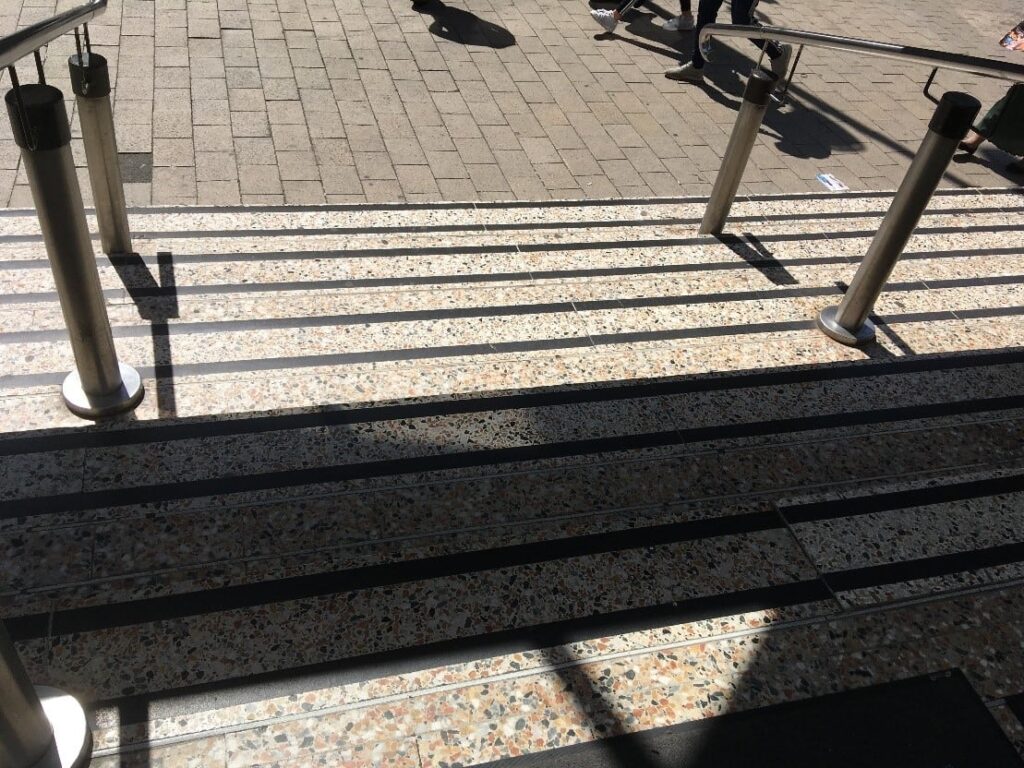
“Each step nosing should incorporate a durable, permanently contrasting continuous material for the full width of the stair on both the tread and the riser to help people who are blind or partially sighted appreciate the extent of the stair and identify individual treads. The contrasting material should extend 50 mm to 65 mm in width from the front edge of the tread and 30 mm to 55 mm from the top of the riser and should contrast visually with the remainder of the tread and riser.”
These recommendations apply both internally or externally and replace what were less explicit requirements from the BS8200:2009+A1 edition which stated:
“Each step nosing should incorporate a permanently contrasting continuous material for the full width of the stair on both the tread and the riser to help blind and partially sighted people appreciate the extent of the stair and identify individual treads. The material should be 50 mm to 65 mm wide on the tread and 30 mm to 55 mm on the riser and should contrast visually with the remainder of the tread and riser (see Annex B).”
The fairly small additions to the 2018 edition have a big impact; the wording is more prescriptive and attempts to deliver a more consistent environment, addressing some of the many issues that have arisen with regards to step details, such as:
- The lack of guidance on a maximum distance from the edge of the step contrasting material should be provided – how far is too far?
- The ‘two stripe’ effect created when contrasting strips are added to the going and a separate strip is added to the rise. A particularly confusing issue when low rise heights are used in combination with wide contrasting strips.
- The potential for inconsistent placement of nosings even within a flight.
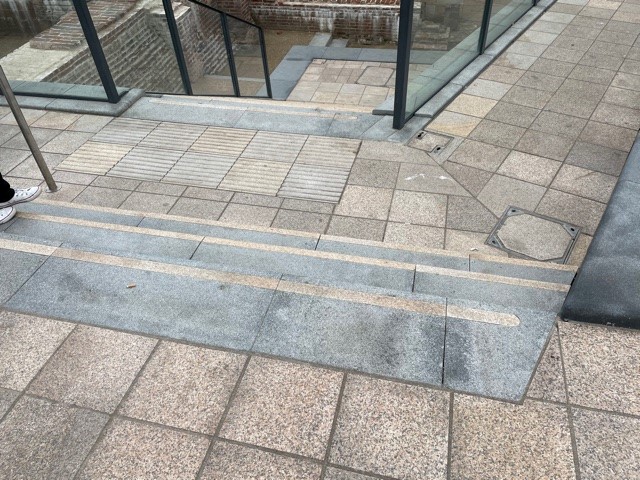

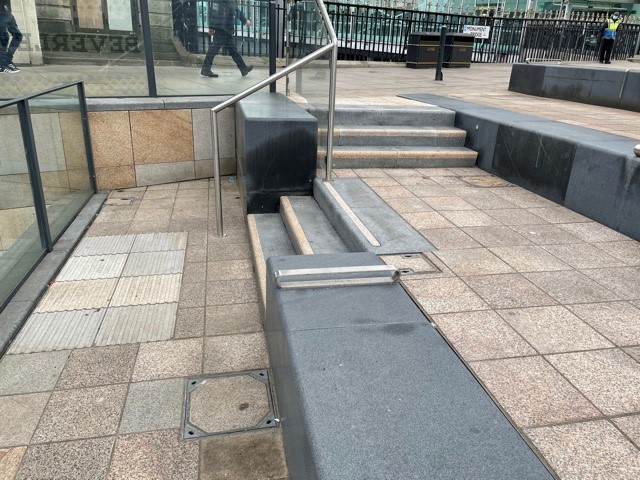

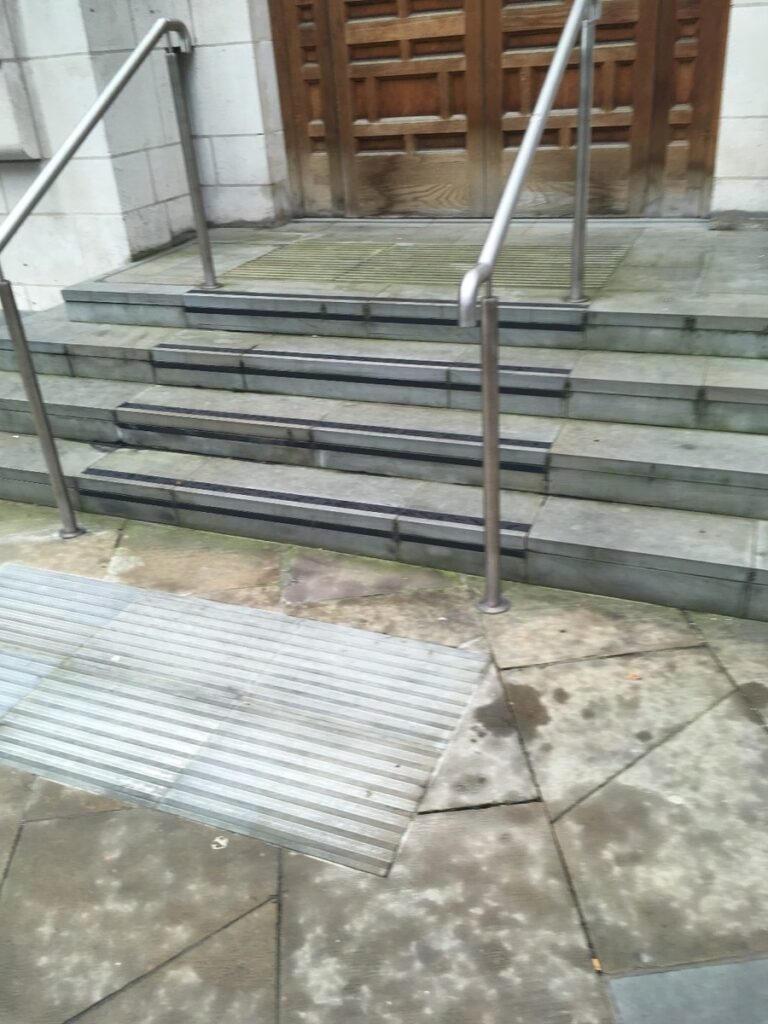
Whilst I have seen some innovation and product development in the sphere of step nosings for the external environment since BS8300:2018 was published, there are reports of technical difficulties in achieving the current BS8300 recommendations, particularly in the external environment. I am, therefore, interested to find out members’ experience to date with trying to achieve step and stair nosings that meet the latest BS8300:2018 requirements for the external environment. I would welcome correspondence from members on this issue, particularly offering any examples you have of how the requirements have been met in the external environment or difficulties you have experienced. To provoke opinion, I also offer the following questions but do feel free to provide broader responses:
- How important do you consider it is to achieve consistency of contrasting nosing placement within a flight of steps?
- How important do you consider consistency of contrasting nosing placement between different stairs, perhaps in different buildings or public areas for example?
- How important do you consider the inclusion of the contrast on the riser?
Please do get in touch regarding these matters using steps@idacs.co.uk