Recently I listened to a very interesting talk by an author discussing her new book called Frostquake. Her Mother, who inspired her with stories of those 4 months, had experienced the great freeze of 1962. If you were born in the 70’s or later, then you will not have any recollection of this but you may have parents or grandparents who, like my children and I, may have vivid memories.
She was suggesting that recovery from this could be likened to our recovery from the present Pandemic which set me thinking about how we will adjust to a near normal life.
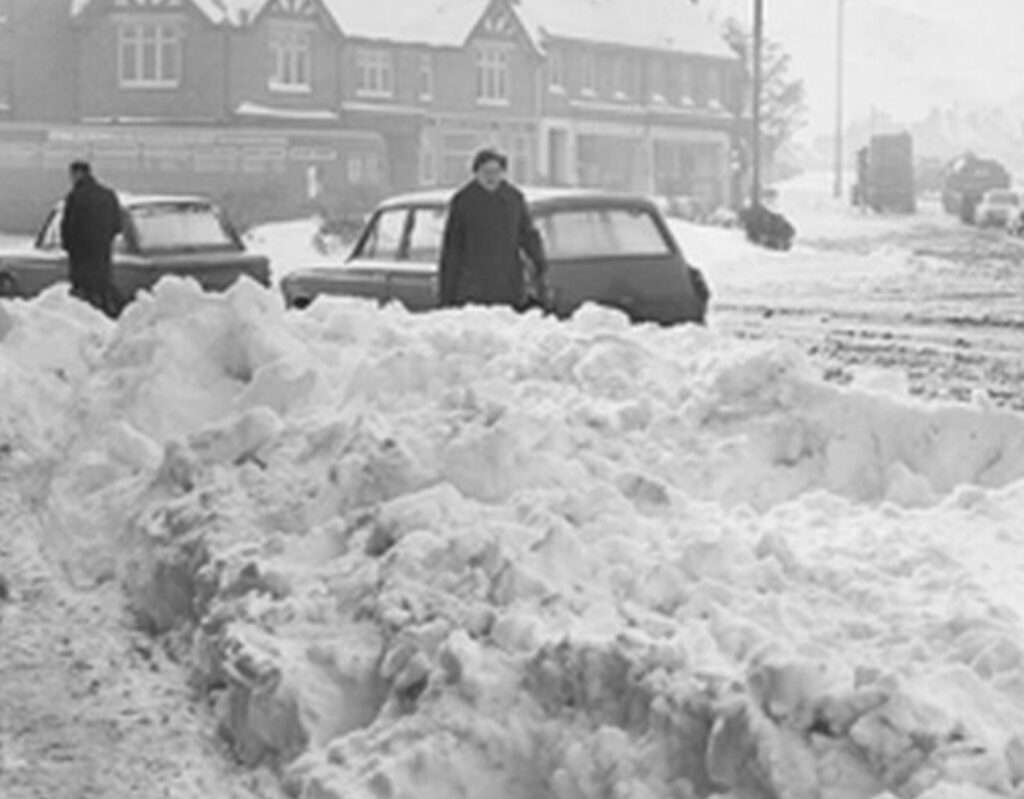
My first thought about 1963 was the way we soldiered on; shops stayed open, people struggled to work, trains and buses still ran, children slithered and snowballed their way to school and cyclists used the tracks left by vehicles in an effort to stay upright. In fact life was more or less normal except of course the scenery; huge banks of snow were piled up at the sides of the road (a delight for the children) but postmen, dustmen, paper boys and deliveries manfully clambered over them and arrived at our front doors.
At the beginning of April 1963 we breathed a sigh of relief as life returned to normal. Or did it? According to the author it was a changed world with young people relatively speaking setting the pace and the manner of changes and she likened it to changes we will find when we finally emerge from Lockdown.
So much change has taken place in the last year but will these changes become permanent and are they all suitable across the board? Will working from home continue with brief visits to Headquarters, will the use of digital communication grow so no paper copies are ever available; we know that at present there is a big digital divide, cashless payment which affects those without any form of bank cards, paperless tickets from machines only, making life difficult for many people with sight or learning problems who rely on assistance (can we label this discrimination?).
But what about relationships? We are now so used to keeping our distance how long will we take to feel comfortable in a large crowd especially if they are ones we don’t know. Do we, as Access specialists, have a role in this recovery and to narrow this gap? Surely we, as those with a voice, should be speaking up for those who feel they have no voice, no power and what is worse no rights.