As many of you will have heard the new Access Association website comes with a forum where we can discuss all manner of things accessibility and inclusion, safe in the knowledge that we are in company with others who are passionate about the work we do.
I have started a forum feed called the inclusive book club. Here I am sharing (a few at a time) both fiction and non-fiction books with an inclusion relevance. It would be good to build this up with everyone’s help so that it can become a vital resource for everyone but in particular for those who are students or at the beginning of their accessibility and inclusion journey.

Those of you who remember a time with cassette tapes and records will remember that CAE used to hold a library of books and students would often go and research their topics in the CAE library. I want to create this resource on line with your help.
Please do add books that you have read with the title, author and a description of the book and maybe comment on how useful or what insight you got from some of the books that are on the list already. Together we can build the virtual library and help each other and those that come after us along the way
I am hoping to follow it up with an inclusive podcast / TV and Movies group too as time allows.
Here is an example from one of our Book Club members
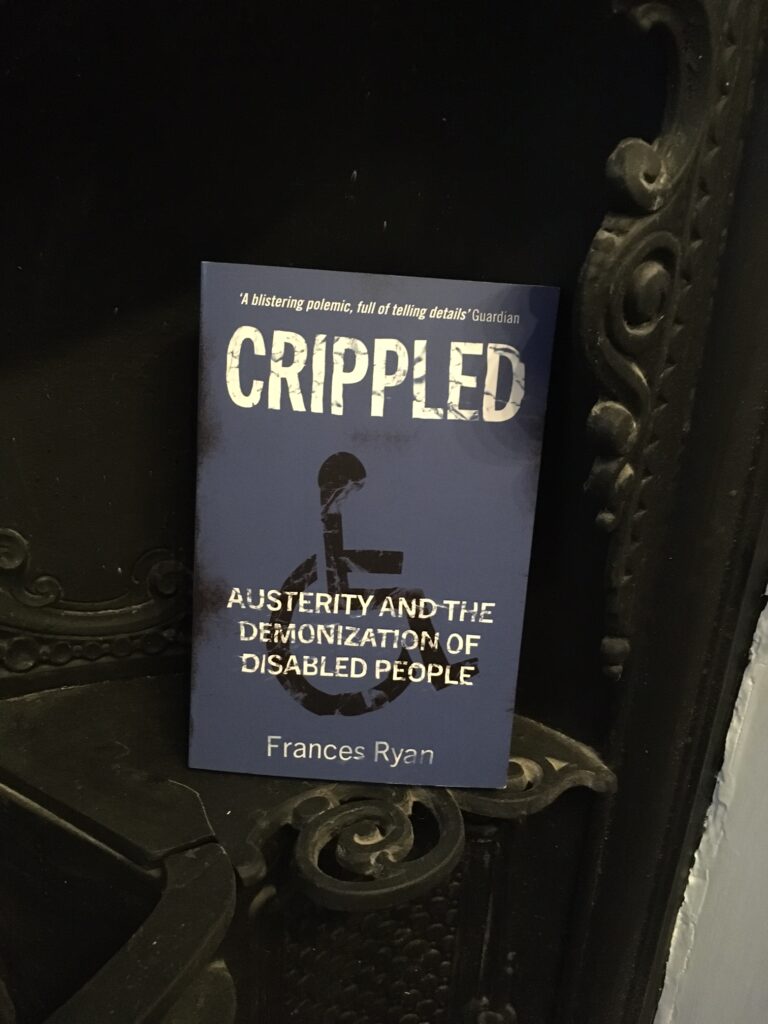
Crippled. Austerity and the demonization of disabled people
By Frances Ryan
This book examines the role that television, newspapers and politicians have played in the demonisation of disabled people. Links and interdependences are drawn between ‘benefits street’ and ‘shop the benefit fraudster’ type programmes, and politicians bragging that they are ‘going after the bogus disabled’, and the default resultant and highly critical and at times resentful view many members of the public hold that: ‘you can stand, you’re playing the system’
The benefits assessment and its hierarchisation of disability/ impairments is discussed, in terms of its requisition for disabled people to prove they are ‘disabled enough’, but also the impact it has on the mindset of the ‘general public’, creating a culture of ‘assessment by opinion’.
The book explores the interrelationship and links between this, cuts to benefits, disability and poverty- utilising case studies and the accounts and experiences of disabled people to great effect.
The author explains the concept of and impacts of ‘othering’ disabled people, as well as the shame society inflicts on disabled people, the suspicion society treats disabled people with, and the intolerance of many, all behaviours/ traits which generally go unchallenged or questioned and are widely accepted and even encouraged by the media and those in power.
With chapters focussing on:
- poverty
- work
- independence
- housing
- women
- children
this book approaches the subjects from a socio-economic standpoint, and makes for uncomfortable reading at times- highlighting case studies looking into avoidable deaths of disabled people, which were effectively caused by societies prejudices.
A must read for anyone working in access and inclusion. ‘Crippled. Austerity and the demonization of disabled people’ will, as a minimum leave readers with a level of awareness of their own and societies views and prejudices and how these are fed, reinforced and influenced.
This book provides a hard hitting, relevant up to date read on societies perception of disability in Britain, and an insight into why many people with impairments are still disabled to the extent that they are.