The Access Association’s Spring Seminar on 26 March brought together researchers, practitioners, advocates and people with lived experience to examine ways to advance gender equity in the built environment, and how it too often limits the lives of women and girls. Held in alignment with International Women’s Day and Women’s History Month, the event moved beyond standard access discussions to address lived experiences, health, and the systemic barriers that affect half the population. Speakers covered ground ranging from neurological disability and green space safety to public transport equity, lactation provision, and the case for genuine advocacy over minimum compliance.
Nicole Thorpe
Nicole Thorpe opened the seminar with a presentation titled ‘Me & My City: A Shaky Relationship’, exploring how urban environments support or obstruct participation for people living with Young-Onset Parkinson’s disease. Thorpe noted that while Parkinson’s – now the world’s second most prevalent neurological condition following Alzheimer’s – impacts approximately 12 million individuals globally, with projections climbing to 25 million by 2050, and the evidence base regarding the specific lived experiences and health outcomes for women remains strikingly limited. Thorpe also addressed how the stigma attached to the condition compounds the practical challenges women face.
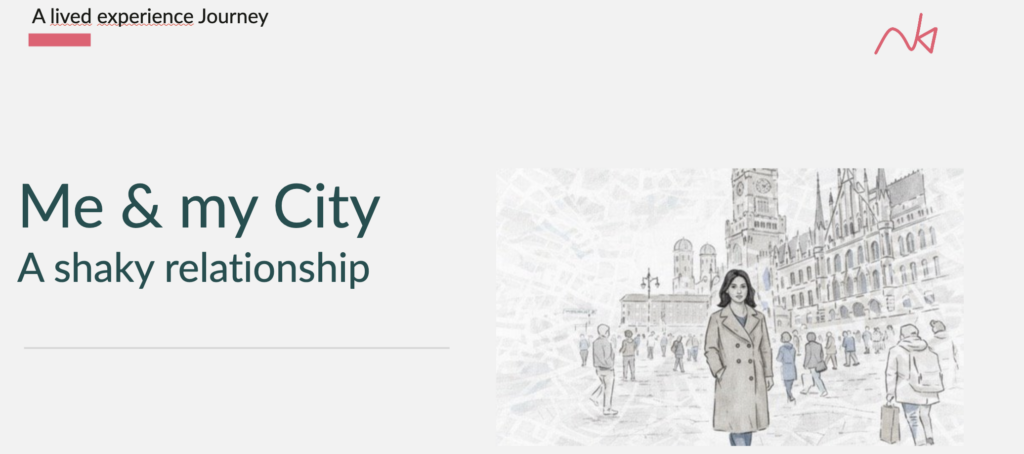
Thorpe called for design that goes beyond access to empowerment such as longer crossing times, rest opportunities, clear journey information, and environments that do not add unnecessary cognitive or sensory load.
Nicole Thorpe is an access consultant and lived experience advocate at the Access Association. Her talk forms part of her ongoing series ‘Me & My City: a shaky relationship.’
Carl McLean
Carl McLean presented evidence-based guidance on how the design and management of parks can be altered to reduce women’s perceptions of risk and create more inclusive green spaces. His session demonstrated that practical interventions – such as lighting, sight lines, management and maintenance – are effective solutions to ensuring women’s safety; however the barrier is not knowledge but the consistent application of that knowledge, with women’s safety often treated as an afterthought rather than the initial planning stage of the design. McLean addresses how women are three times more likely to feel unsafe in British parks, causing them to visit less often. Not only does this impact women’s mental and physical health, but also their independence.
Carl McLean is the Chair of World Urban Parks Europe committee, and an International Development Manager at the Green Flag Award. He has supported park departments in over 20 countries, improving the quality of their green spaces.
Professor Pippa Catterall
Professor Pippa Catterall presented her session titled ‘Accessibility and Inclusion in Public Spaces: Beyond BS 8300?’, exploring how spaces feel for all users – not just whether they can be physically entered, but whether they feel comfortable, safe and welcoming. Moving through themes of transit and wayfinding, amenities, representation and ambience, she drew on interior and exterior case studies ranging from parks to public transport

A striking thread was the topic of public transport, where women take three times as many bus journeys as men, driven by shopping, care-giving and school runs, yet investment in buses has been chronically lower than other modes. Her research also surfaced a ‘security paradox’ where respondents found traditional security features such as CCTV and hostile architecture made spaces feel less safe rather than more. Catterall discussed her co-authored reports Queering Public Space (2021) and Queer Perspectives on Public Space (2024), setting out how changing the ambience of a location – through representation, soundscape, lighting and inclusive wayfinding – can make it genuinely welcoming rather than merely compliant.
Pippa Catterall is Professor of History and Policy at the University of Westminster, a trustee of the Heritage of London Trust and a member of the Valuation Tribunal for England. She co-authored the reports Queering Public Space (2021) and Queer Perspectives on Public Space (2024) and serves on the steering group for the LGBTQ+ appendix to the RIBA Inclusive Design Overlay. Her current research focuses on inclusion and accessibility in public transport in London.
Carly Sharp and Jo Williams
Carly Sharp and Jo Williams combined their professional expertise in inclusive design with their personal experience as mothers – both of whom began their parenting journeys with babies in the NICU. Williams, a wheelchair user since 2018, spoke about exclusively pumping and navigating parenthood from a wheelchair. Sharp, a mother of twins, addressed the challenges of breastfeeding while studying and beginning her career. Together they made the case for properly designed lactation spaces, an area where the built environment continues to fail women significantly.

The statistics are stark: up to 80% of mothers of multiples initiate breastfeeding, but that figure drops by more than 50% by six months – a decline directly connected to inadequate facilities. What currently exists is often a toilet cubicle or storage cupboard; what is actually needed is a space designed for hormones as well as function, with emotional safety, ergonomic comfort, correct milk storage, equipment integration and a calm sensory environment built in. Williams situated this within the wider picture of disability and parenthood, particularly whilst being a wheelchair user. She explored how 30–40% of disabled adults are parents, and with an estimated half a million wheelchair-using parents in the UK, the built environment’s failure to support disabled parents is both widespread and under-acknowledged. Their session also covered the Inclusive Design Overlay to the RIBA Plan of Work (2023) as a framework for embedding these considerations from the earliest stages of a project.
Carly Sharp is an Inclusive Design Consultant and Interior Designer. She is the founder of Ode&Ettle, an Interior Design Studio in Mid-Sussex. Her recent research into lactation spaces was inspired by her own experience as a mother of twins. Carly has also been working on inclusivity in interior design and marine design, and has an upcoming research paper being released in 2027.
Jo Williams is a communications professional and disability advocate at Motionspot, where she works with organisations to create inclusive spaces that support EDI goals. She is a Greater Cambridge Design Review Panel member and a Back Up Trust mentor.
Dr Sarah Ackland
Dr Sarah Ackland closed the seminar by drawing on ‘Taking Space’, her PhD research project (2020–2025), her practice at muf architecture/art, and the work of Part W, a women’s campaign group. Her argument was that access should be understood not as a compliance exercise but as a task of advocacy. Urban environments, she contended, are habitually designed around assumed ‘default’ bodies – implicitly male, non-disabled, unencumbered by pregnancy or caring responsibilities – which means that for women and marginalised bodies, minimum standards become the ceiling rather than the floor.
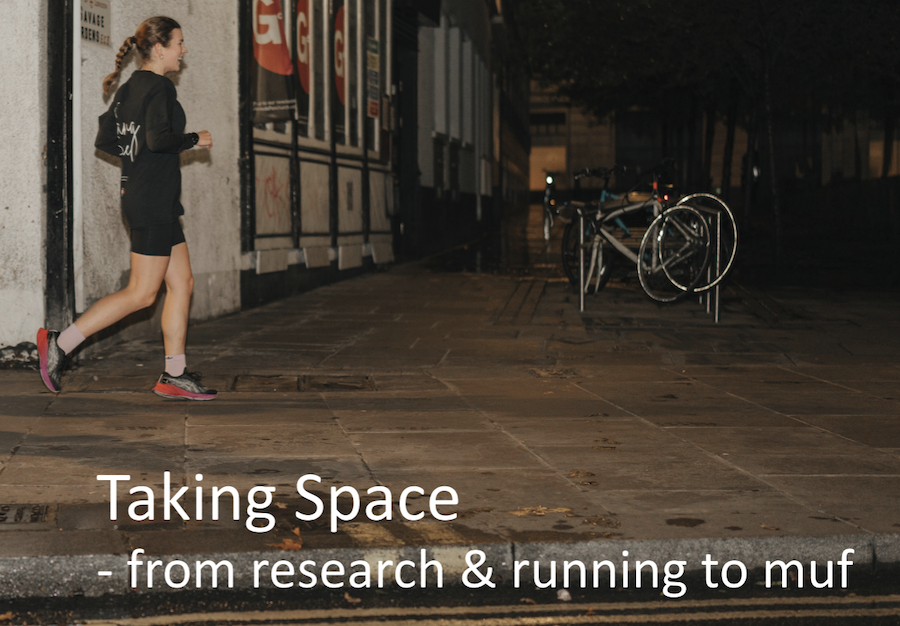
Drawing from both research and personal experience, she reflected on how activists and practitioners can transform people’s experience of space, and on what genuine change – rather than mere compliance – actually requires.
Dr Sarah Ackland is a design tutor at Cardiff University, lecturer at the Architectural Association and practising architect at muf architecture/art in London. She is the founder of Taking Space, a feminist research platform, and the podcast 29% Equal, which explored how to create meaningful change for women in architecture and received the RIBA research fund.
Reflections
Each presentation made a version of the same argument: the built environment is not a neutral backdrop but an active participant in who gets to move through the world freely, safely and with dignity. Designing for women and girls is not a corrective supplement to mainstream practice – it is a more rigorous, more honest version of it. The evidence base exists; the frameworks are developing. What is required now is the collective professional will to apply them.
You can watch the seminar and catch up with the speakers at: Gender equity after event information