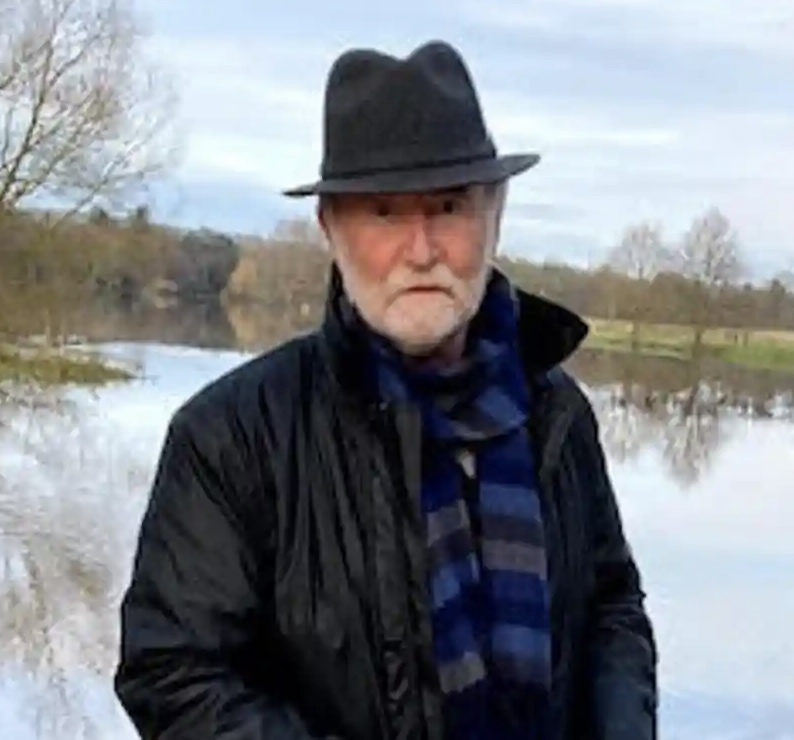
Stewart McGough, who has died aged 74, was an architect with a special focus on access for people with disabilities. He worked on Wembley Stadium and was employed as an expert on design for disabled people during the London 2012 Olympic Games.
Stewart’s career began in the architects’ department at Manchester city council (1974-79). From there he went on to design house adaptations for disabled people in the building control department at Meirionnydd district council (1979-86) in north Wales.
In 1986 he joined the London borough of Brent as a specialist disabled access designer, working on Wembley Stadium and the establishment of the Access Committee for England. He then worked as an architect at Telford borough council from 1990 until he took early retirement in 2004.
Stewart and the Access Association
Stewart was one of the founding members of the Access Officer’s Association (AOA), and in 1991 became the first president. He played an instrumental part in the Association and continued when the Association became the Access Association.
Stewart was made an honorary member of the Access Association in 2009.
Stewart reminisced about the setting up of the AOA and showed his determination, dedication and enthusiasm:
“I think we, the AOA, in a spirit of collaborative endeavour with other notable players, did a very effective job of changing the climate of negativity towards disabled people prevalent in both the government of the day and in industry circles at the inception of the Association. This cleared the ground for the quantum leap in civil rights that the Disability Discrimination Acts (1995 & 2005) are potentially capable of achieving.
Local Access Groups, Council Access Officers and an Access Committee for England (ACE) were all first advocated in 1979. In my experience, the idea of setting up a national association of Access Officers all began with a suggestion made early in 1988 to Sarah Langton-Lockton, then Chief Executive of the Centre on Environment for the Handicapped (CEH), which later became the Centre for Accessible Environments (CAE). I suggested to Sarah that the missing piece in the jigsaw of organisations active in bringing about better access and mobility for disabled people was an association of access officers to network and support and co-ordinate the activities of those working in isolation within local authorities in the regions. A collective organisation could bring practical knowledge of the problems of implementation and identify the legislative tools and associated guidance needed to do the job. She kindly opened the door to the Access Committee of England (ACE) through which this might be achieved.
This objective was added in 1990 to the agenda for the newly re-established Access Committee for England, chaired by Duncan Watson, CBE. He got behind the idea and with the commitment of his stalwart body of committee members and dedicated staff (including Sabrina Aaronovitch, then ACE’s Policy Officer), poured support & resources into making it happen. At this point ACE had a recognised role and, crucially, govt funding – in return for providing advice to the Govt on the advisability of measures to improve accessibility for disabled people. What ACE lacked were professional foot soldiers around the UK. That’s where an Association would come in.
The UK’s first full-time Access Officer, Anne-Marie Sutor, had been appointed at Leicester City Council in 1981, as Leicester’s contribution to the International Year of Disabled People (IYDP). The Dept of Environment’s Planning Guidance (1985) advised Local Authorities to designate an individual to address the issue of access for disabled people, within their (then) limited powers of negotiation. I think I was the first full-time Access Officer in London, arriving in Brent in 1985.
There were enough full or part-time Access Officers in London by 1988 to set up an exploratory citywide network to evolve Planning policies. By 1988 there was also an active group in the West Midlands, under the guiding influence of Wolverhampton Council’s Linda Hardy. I joined that group in 1990, on moving to Wrekin Council. Coincidentally, I was appointed, together with fellow Access Officers Julie Fleck and Andrew Walker, as a member of The Access Committee for England.
With ACE’s network of contacts we were able to identify a number of active individuals across the UK to invite to an exploratory meeting chaired by Duncan Watson at Wolverhampton Civic Centre, in 1990, to see what potential there might be for forming a national Association. True to form, there were differences of opinion, but overwhelmingly a positive recognition that this could be extremely helpful and a powerful force for change. It resulted in a general invitation to as many contacts as we could muster nationwide to attend a launch meeting at the ACE office in London on 1st May 1991.
Being a combative breed, Access Officers contested every detail of the constitution proposed. True to form, Pat Midson of Leicester City Council rose from the assembly to apply his analytical talents. We negotiated a healthy compromise and elected the inaugural Management Team of: myself, Pat, Linda and Andrew. We were up and running and out on our own – with a big agenda but with no resources, other than a handful of intrepid volunteers. [During the first year (1991-92) Peter Monk took over from Linda Hardy as Hon Treasurer.
I would like to offer a great vote of thanks to my fellow elected officers and to all the AOA’s Regional Representatives for their time & commitment in serving as the Association’s Council. Within a year we had become recognised – as the “powers that be” put us on their consultation lists and invited us to meetings. Whilst coming from local government and the natural allies of those in central govt, we – faced with the day-to-day frustration of delivering our message – had an appetite and an agenda for change that they didn’t share. Inevitably, among such a driven and committed bunch of battlers, on our home turf, there were disagreements on the best way forward. There was great enthusiasm for change and meetings were lively.”